
A cyberattack does not end when suspicious activity is stopped or compromised systems are restored. For a business, that moment marks the beginning of another important phase: understanding what happened, why it happened, and how to reduce the chance of it happening again.
The immediate priority is usually containment. Teams isolate affected systems, remove malicious activity, restore access, and protect critical data. Yet a quick recovery can leave important questions unanswered. How did attackers gain access? Which weakness did they exploit? How long were they inside? What allowed the incident to progress?
These questions move an organization from recovery toward understanding. That distinction can shape stronger security decisions long after.
Why Root Cause Analysis & Incident Reporting Matter
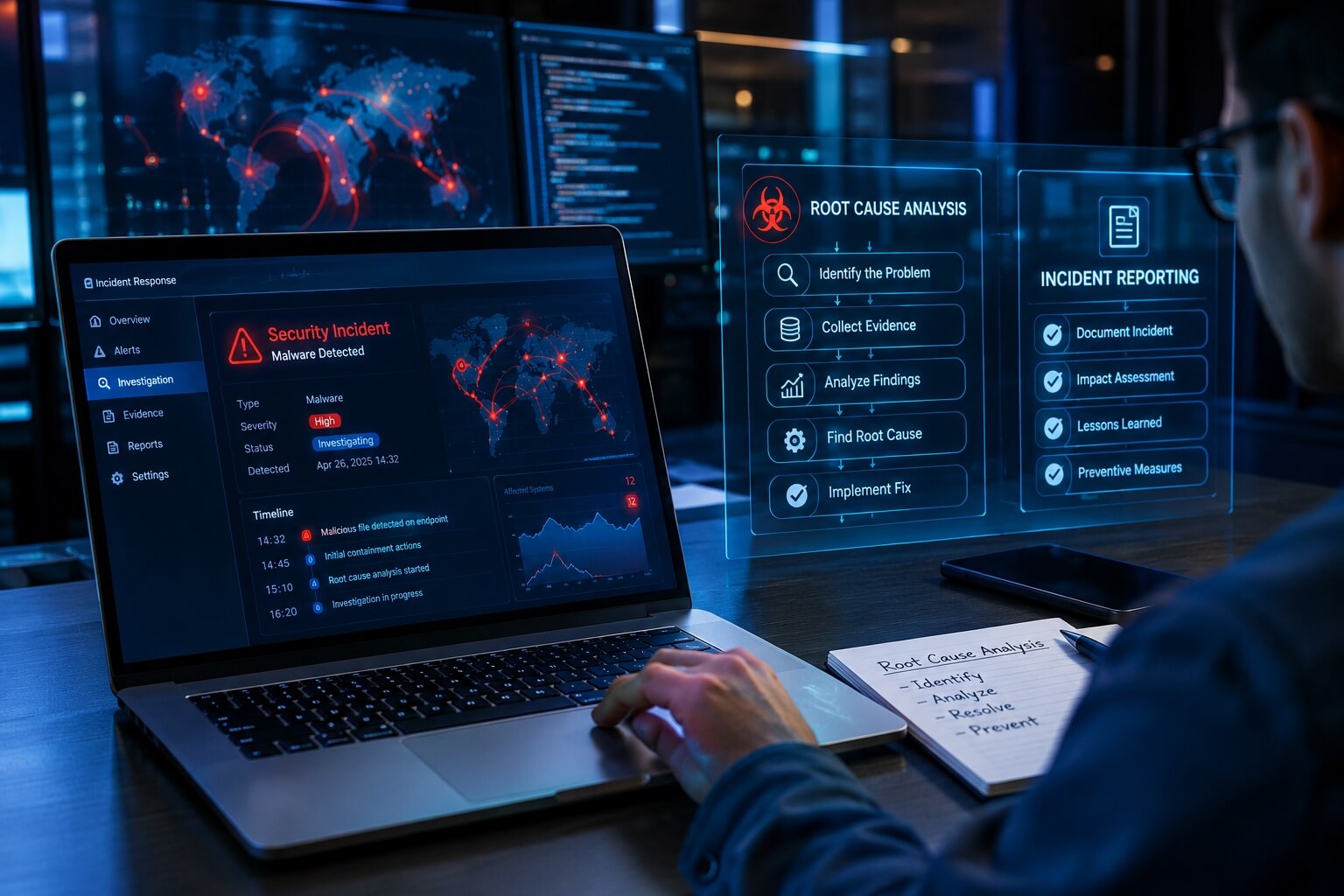
Root cause analysis & incident reporting provide a structured way to investigate a cybersecurity incident beyond its visible symptoms. Instead of focusing only on what was damaged, investigators examine the sequence of events and identify the underlying conditions that contributed to the attack.
The root cause could involve an unpatched application, compromised credentials, misconfigured infrastructure, inadequate access controls, or another overlooked weakness. Identifying that cause gives security teams something specific to address rather than simply treating the symptoms.
However, investigation is only part of the process. Its findings need to be documented clearly so that technical teams, management, and relevant stakeholders can understand what occurred and what should happen next.
From Investigation to Incident Reporting
A useful incident report should create a clear account of the event. It can document the timeline, affected systems, indicators of compromise, investigative findings, root cause, actions taken, and recommended improvements.
This documentation serves a practical purpose. It helps decision-makers understand the incident without getting lost in unnecessary technical detail. It can also support internal reviews, security improvements, compliance requirements, and future investigations.
More importantly, a well-prepared report turns an isolated incident into organizational knowledge.
What Happens After Root Cause Analysis & Incident Reporting?
The investigation should lead to action. Businesses can use the findings to strengthen authentication, update vulnerable software, review permissions, improve monitoring, harden servers, or address weaknesses in existing security processes.
This is where post-incident work becomes more than recovery. It becomes an opportunity to improve the organization’s ability to recognize, contain, and respond to future threats.
Turning a Cyberattack Into a Learning Opportunity
No cybersecurity strategy can guarantee that an organization will never experience another attack. What matters after an incident is whether the business understands what occurred and uses that understanding to improve.
Root Cause Analysis & Incident Reporting help create that connection between an attack and meaningful corrective action. By investigating the cause, documenting the evidence, and acting on the findings, organizations can move beyond simply asking, “How do we recover?” and begin asking a more valuable question: “What can we change so this is less likely to happen again?”
After all, recovery restores systems. Understanding the cause helps strengthen what comes next.