
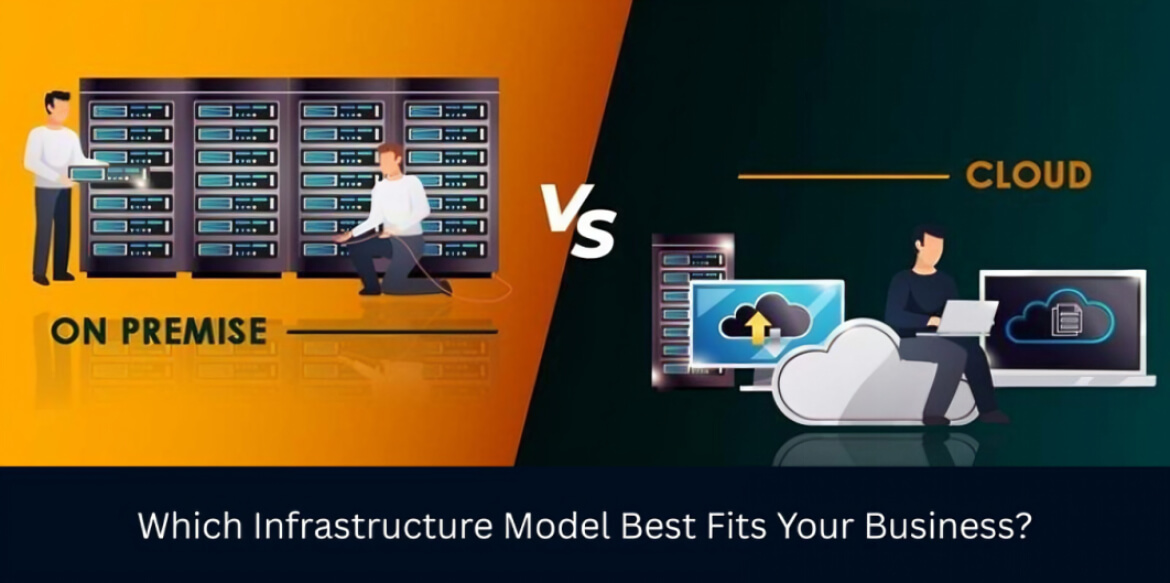
Cloud vs On-Premise: Which Infrastructure Model Best Fits Your Business?
As businesses undergo digital transformation, one of the most strategic decisions they face is choosing the right infrastructure model: Cloud or On-Premise. Each approach has distinct advantages and limitations depending on the organization’s size, industry, goals, and regulatory environment.
Neunotion assists companies with selecting technology that complements their expansion and operational plans. Here’s a breakdown of the pros and cons of cloud and on-premise infrastructure—and how to decide which one fits your business best.
On-Premise: Full Control with Greater Responsibility
On-premise infrastructure refers to hosting your servers, storage, and networking equipment locally, within your facility. This traditional model is preferred by businesses that require full control over their systems and data.
Advantages:
- Complete Ownership and Control: You manage every part of your infrastructure, from physical servers to security protocols. This level of control is often essential in highly regulated industries.
- Customization: Tailor every layer of hardware and software to meet specific business or technical requirements.
- Data Sovereignty: Sensitive data stays on-site, which can help in meeting strict compliance standards in some jurisdictions.
Challenges:
- High Upfront Cost: Buying hardware, setting up data centers, and hiring IT staff involves significant capital expenditure.
- Maintenance Burden: You are responsible for system updates, hardware repairs, and scaling resources as business needs grow.
- Limited Scalability: Expanding infrastructure can be slow and expensive, especially during sudden demand spikes.
Cloud: Flexibility, Agility, and Innovation
Cloud engineering is hosted by third-party providers (like AWS, Azure, or Google Cloud), offering resources via the internet. It’s designed for businesses seeking agility, innovation, and reduced operational burden.
Advantages:
- Scalability and Flexibility: Instantly scale resources up or down based on real-time demand. Ideal for growing businesses or those with fluctuating workloads.
- Lower Initial Investment: Shift from CapEx to OpEx. You pay for what you use, which improves budgeting and cost control.
- Automatic Updates & Maintenance: Cloud providers handle infrastructure maintenance, allowing your team to focus on innovation.
- Faster Deployment: Deploy new applications and services rapidly without long procurement or installation cycles.
Challenges:
- Less Control: You rely on the provider’s systems, which may limit deep customization.
- Data Security Concerns: Although cloud platforms are secure, some organizations are wary of storing sensitive data off-site.
- Ongoing Subscription Costs: Over time, cloud usage fees can add up, especially without proper resource monitoring.
Choosing the Right Model
There’s no one-size-fits-all answer.
Many modern businesses are now embracing a hybrid model, leveraging the cloud for scalability and innovation while maintaining critical systems on-premises for security and compliance.
Ask yourself:
- Do you need rapid scalability or full control?
- Is data sovereignty a top concern?
- How much can you invest upfront?
- Are you prepared to manage hardware, or would you prefer a provider to do it?
Final Thoughts
Choosing between cloud and on-premise infrastructure is not just a technical decision—it’s a strategic one. At Neunotion, we guide businesses through the evaluation process, helping them implement the model (or combination) that supports performance, security, and long-term growth.
Let’s craft the future of your business, on your terms. Contact us today.